
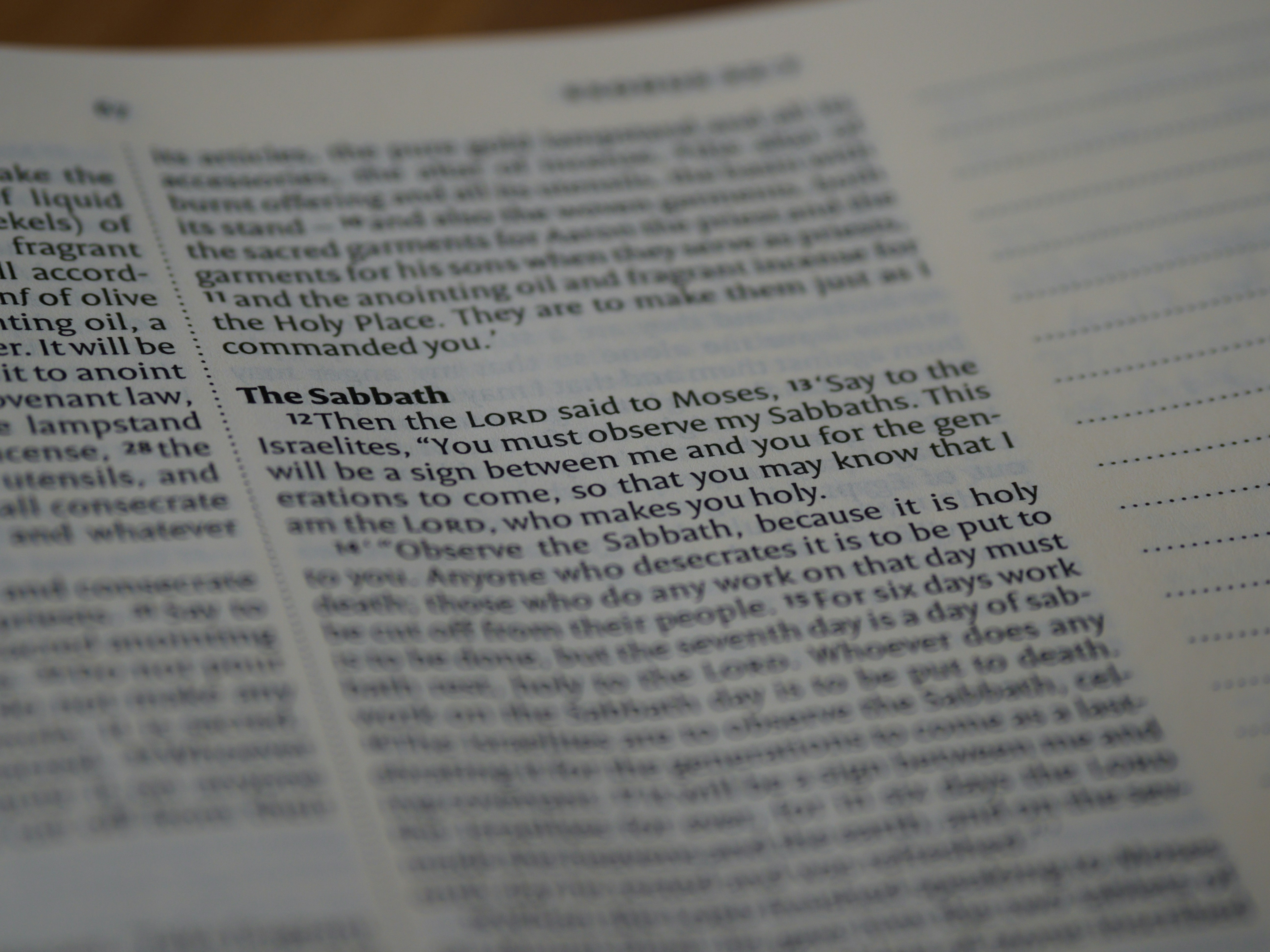
Introduction to Ezekiel 20:12
The book of Ezekiel, a prophetic text within the Hebrew Bible, holds considerable significance in understanding the relationship between God and the people of Israel. It was authored by the prophet Ezekiel, who lived during the Babylonian exile and addressed the Israelites during a time of immense turmoil and spiritual crisis. Within this context, Ezekiel 20:12 emerges as a critical verse that reflects profound themes concerning divine law, covenant, and the institution of the Sabbath.
Ezekiel 20:12 states, “I also gave them my Sabbaths as a sign between us, so they would know that I the Lord made them holy.” This verse encapsulates the essence of the Sabbaths as not only a day of rest but as an enduring symbol of God’s covenant with His people. In Jewish tradition, the Sabbaths are of paramount importance, serving as a weekly opportunity for reflection, worship, and renewal of faith. Through the observance of these holy days, the Israelites are invited to recognize their identity as God’s chosen people, set apart from others.
<pmoreover, 20:12="" a="" according="" affirming="" align="" and="" appreciate="" are="" as="" between="" book,="" broader="" by="" can="" commandments.="" committed="" context="" conveying="" deeper="" divine="" established="" expression="" ezekiel="" for="" fostering="" framework="" function="" god="" god's="" god.="" grace="" his="" holiness="" how="" illustrates="" in="" interaction="" israel,="" israelites="" its="" lives="" mercy.="" merely="" narrative="" necessity="" not="" observances;="" of="" offering="" ongoing="" p="" people.
The Role of the Sabbaths in Biblical Texts
The concept of the Sabbaths is deeply embedded in the biblical narrative, serving as a crucial aspect of spiritual and communal life in the ancient Israelite context. The origins of the Sabbath can be traced back to the creation account in Genesis. In Genesis 2:2-3, it is recorded that God rested on the seventh day after the creation of the world, thereby establishing a pattern for humankind to follow. This divine precedent underscores the Sabbath not only as a day of rest but also as a celebration of creation and a symbol of God’s sovereignty over time.
The significant role of the Sabbaths is further emphasized in the Law given to Moses, particularly in the book of Exodus. The Fourth Commandment, found in Exodus 20:8-11, explicitly instructs the Israelites to remember the Sabbath day and keep it holy. This commandment serves several purposes: it instills a rhythm of work and rest, fosters communal identity, and provides an opportunity for spiritual reflection. The Sabbath becomes a day set apart, where ordinary labor ceases, allowing individuals to reconnect with themselves, their families, and their God.
<pmoreover, 23="" a="" also="" and="" are="" as="" belief="" biblical="" both="" but="" commemorate="" communities.
Examining the role of the Sabbaths in biblical texts reveals a rich tapestry of meaning, emphasizing the importance of rest and spiritual reflection in the lives of the faithful. Through adherence to these sacred periods, believers not only honor the commandments but also nurture their relationship with God and the larger community.
The Concept of Holiness in the Bible
In the biblical context, the concept of holiness is foundational to understanding both God’s nature and the expectations placed upon His people. Holiness is frequently described as a quality of being set apart, signifying moral purity, spiritual completeness, and separateness from sin. The term “holy” originates from the Hebrew word “qadosh,” which encapsulates this idea of being distinct from ordinary worldly concerns. This trait not only defines God, who is wholly pure and perfect, but it also establishes a standard for living that His followers are called to emulate.
Throughout scripture, various passages highlight the implications of holiness for the community of believers. For instance, the call to be holy as God is holy (Leviticus 11:44) underscores the importance of aspiring to this divine characteristic. The implications stretch beyond individual behavior; they encompass the collective identity of the faithful as a community that reflects God’s holiness in a world fraught with moral ambiguity. This commitment to holiness influences worship practices, moral choices, and the establishment of social norms within the community of faith.
Furthermore, the observance of the Sabbaths plays a critical role in reinforcing the significance of holiness among God’s people. The Sabbaths are seen not just as days of rest but as sacred times that encourage reflection on God’s holiness and the call for His followers to live according to His statutes. Engaging with the Sabbaths enables believers to realign their lives with God’s intentions, thus fostering a deeper understanding of what it means to be set apart. Observing these holy days strengthens communal identity while allowing participants to embrace the transformative power of divine holiness.
The Significance of ‘A Sign Between Us’
The phrase “a sign between us,” found in Ezekiel 20:12, carries profound theological significance within the context of God’s covenant with Israel. In this verse, God designates the Sabbath as a distinctive symbol of His relationship with His people. Throughout biblical history, signs have often served crucial roles in communicating God’s intentions, and the Sabbath is no exception. By instituting the Sabbath as a sign, God emphasizes not only His authority but also His commitment to nurturing a dedicated relationship with Israel.
The Sabbath, defined as a day of rest, serves as a reminder of God’s creative work as well as His redemptive power. In Exodus 31:13, it is explicitly termed “a sign” that distinguishes those who are faithful to the covenant from those who are not. This notion is reinforced in Ezekiel 20:12, where God’s intention is to foster an awareness among His people of their identity as His chosen ones. The observance of the Sabbath invites Israel to reflect on their unique relationship with God, which has been established through the covenant.
The theological implications of the Sabbath as a sign are manifold. Firstly, it indicates the presence of divine authority in human affairs, wherein the act of resting is both an acknowledgment of God’s sovereignty and a submission to His will. Secondly, the Sabbath signifies a historical reminder of redemption, as God liberated Israel from slavery in Egypt, marking the transition from servitude to a life of freedom under divine guidance. Ultimately, the Sabbath functions as a bridge between the transcendent and the earthly, allowing believers to experience communion with God and reminding them of their responsibilities towards Him.
Historical Context of Ezekiel’s Message
The historical context of Ezekiel’s writings is vital for understanding the significance of his prophetic messages, particularly in relation to the Israelites’ experiences during the Babylonian exile. Ezekiel, a priest and prophet, began his ministry in the early 6th century BCE, a time marked by widespread turmoil for the Jewish people. The Babylonian conquest of Jerusalem in 586 BCE led to the destruction of the temple and the exile of many Israelites to Babylon, fundamentally altering their understanding of their covenant with God and their national identity.
During this period, the Israelites grappled with feelings of despair and abandonment, as they found themselves in a foreign land away from Jerusalem. This dislocation forced them to reconsider their beliefs and practices, particularly their observance of the Sabbath and other religious laws. The Babylonian exile served as a crucible for the development of Jewish thought, prompting a reevaluation of their relationship with God. In this environment, Ezekiel’s messages took on a new resonance, addressing issues of identity and fidelity to the covenant amidst foreign influences.
Ezekiel’s prophecies often focused on the themes of repentance and restoration, emphasizing the importance of the Sabbaths as a sign of the covenant. Understanding Ezekiel 20:12 in this context reveals how the practice of observing the Sabbaths was not merely ritualistic but pivotal in reaffirming their relationship with God during times of crisis. The message conveyed through Ezekiel reflects a deeper longing for spiritual and national restoration, as he urged the Israelites to remember their divine identity in the face of overwhelming adversity. Thus, the historical backdrop of the Babylonian exile significantly shapes the interpretation of Ezekiel’s teachings, underscoring the enduring importance of the Sabbaths in maintaining their covenantal relationship with God.
Modern-Day Applications of the Sabbath
The teachings from Ezekiel 20:12 shed light on the significance of the Sabbath, emphasizing rest, reflection, and a commitment to holiness. In contemporary society, these teachings retain their relevance amidst increasingly busy schedules and the relentless pace of modern life. As individuals grapple with work pressures and family responsibilities, distinguishing time for rest becomes crucial not only for physical rejuvenation but also for mental and spiritual well-being.
One of the primary applications of the Sabbath in today’s context is the practice of deliberate rest. Setting aside one day a week or specific time blocks dedicated to disengaging from daily tasks can provide a much-needed respite from the chaos of everyday life. This intentional pause allows for mental clarity and rejuvenation, fostering emotional resilience and the ability to tackle challenges with renewed vigor. The concept of taking a break is increasingly advocated in modern wellness practices and can significantly improve productivity and creativity when returning to work obligations.
Moreover, the Sabbath encourages reflection, a practice often overlooked in our fast-paced lives. Engaging in self-examination and contemplation on one’s values, goals, and spiritual beliefs contributes to personal growth and fulfillment. By contemplating these dimensions during our designated time of rest, we cultivate a deeper understanding of ourselves and our purpose. Integrating practices such as meditation, journaling, or quiet reading during this time can deepen the experience, enabling individual and communal growth.
Holiness, as expressed in Ezekiel 20:12, also finds its expression today through communal gatherings such as worship services or family meals. Observing the Sabbath in community strengthens relationships and provides an avenue for shared reflections on values and faith. By considering how one can incorporate these principles into their lives today, the teachings of the Sabbath can transform not only personal routines but also foster stronger communities through collective observance
.
Connecting the Old Testament to the New Testament
The concept of the Sabbath, deeply rooted in the Old Testament, is pivotal to understanding the broader biblical narrative. Initially instituted as a day of rest and spiritual reflection, the Sabbath was a crucial component of Israelite identity, as noted in the Ten Commandments (Exodus 20:8-11). In this context, the Sabbath serves not only as a day of cessation from labor but also as a sign of the covenant between God and His people, emphasizing the importance of rest in God’s creation and the need for a structured time of worship and renewal.
As we transition into the New Testament, the perception and observance of the Sabbath undergo significant evolution, as exemplified in the teachings and actions of Jesus Christ. Throughout the Gospels, Jesus demonstrates a profound understanding of the Sabbath’s intent, often challenging the restrictive interpretations held by religious leaders of His time. In Mark 2:27, He encapsulates this idea by stating, “The Sabbath was made for man, not man for the Sabbath,” which highlights the purpose of the Sabbath as a gift for human benefit rather than a burdensome obligation.
The apostles further expanded on this understanding, illustrating a shift in focus from strict adherence to the law towards a heart-centered approach to worship. For instance, in Acts 20:7, the early Christians gathered on the first day of the week, indicating a movement away from the traditional Saturday observance to align with the resurrection of Christ. This transformation signifies that the principles underlying the Sabbath—rest, reflection, and worship—continue to hold significance, even as the form of observance adapts to new understandings within the Christian faith.
Thematic Reflections on God’s Sovereignty
The verse Ezekiel 20:12 encapsulates profound themes of sovereignty and authority, underscoring God’s control over all creation. In this passage, the Lord asserts His dominion through the establishment of the Sabbaths, which act as sacred markers in the lives of His people. The Sabbaths are not merely days of rest; they are divine appointments that remind believers of God’s overarching authority and His role as the sustainer of life and order in the universe.
Recognizing God’s sovereignty involves accepting His ultimate power over all aspects of existence, including the moral and ethical frameworks that guide human behavior. The regular observance of the Sabbath is a visible manifestation of this recognition, a covenantal sign that reflects a deeper relationship between God and His people. Each Sabbath, with its affirmation of rest and reflection, serves as an opportunity for the faithful to recalibrate their understanding of divine authority. It reminds them that God’s plans are paramount and that His commands are rooted in love and wisdom.
Moreover, the sanctity of the Sabbaths points to a rhythm of life that God has designed for humanity—a rhythm meant to foster community, worship, and gratitude. In observing the Sabbath, people engage in acts of remembrance, celebrating not only God’s creation but also His redemptive work. This observance helps individuals internalize the reality that they are not mere subjects in a vast cosmos but cherished members of God’s creation, called to respond to His sovereignty with love and obedience.
Consequently, the Sabbaths stand as a testament to the intricate balance of divine sovereignty and human responsibility. They remind God’s people of their identity as bearers of His covenant, entrusted to reflect the values of His kingdom on earth. Through understanding Ezekiel 20:12, one can appreciate how the Sabbaths reinforce the significance of recognizing God’s authority in every aspect of life.
Conclusion: Embracing the Gift of the Sabbath
The teachings found in Ezekiel 20:12 highlight the profound significance of the Sabbaths as a sacred gift bestowed by God. These designated days of rest are not merely rituals or formalities; they serve as vital opportunities for believers to reconnect with their Creator, appreciate His holiness, and cultivate a deeper spiritual relationship. By recognizing and honoring the commandment to observe the Sabbath, individuals engage in a form of worship that transcends routine obligations, instead embracing a meaningful pause in their hectic lives.
The importance of the Sabbath extends beyond a day of rest. It is a reminder of the covenant between God and His people, a symbol of divine love and commitment. Observing this sacred time allows believers to reflect on their blessings, recognize God’s presence in their lives, and renew their focus on spiritual priorities. This intentional practice of sabbath observance can foster a sense of community, as families and congregations come together to share in worship and fellowship.
Moreover, the rhythm of rest that the Sabbath promotes has tangible benefits for mental, emotional, and physical well-being. In a world that often prioritizes constant productivity and busyness, taking time to rest, reflect, and recharge can alleviate stress and promote overall health. The Sabbath, therefore, not only nurtures the soul but also enhances the quality of one’s life.
As believers seek to incorporate the Sabbath into their lives, they are encouraged to approach this commandment with intentionality and reverence. Embracing the gift of the Sabbath is not merely about refraining from work; it is about recognizing the holiness of God and inviting deeper communion with Him. Ultimately, the practice of observing the Sabbath allows individuals to experience a fuller understanding of their faith and an enriched relationship with God, enhancing their spiritual journey.